Woodoku Blast
- 4.8
- Rating
- 10.00M
- Installs
- Free
- Price
 Analysis by App-foxy
Woodoku Blast is the kind of puzzle game I open when I want something familiar within seconds but still demanding enough to hold my attention. It combines the calm, grid-based feel of wooden block puzzles with the pressure of clearing space before the board becomes difficult to manage. That simple setup makes it easy to start during a short break, although the later decisions can become surprisingly tense.
Developed by Tripledot Studios Limited, this free puzzle game is aimed at everyone and runs on Android 7.0 or later. It has built a strong audience, with a 4.8 average from around 317 thousand ratings and more than 10 million installs. Those figures do not automatically make it the right choice for every player, but they do reflect how accessible the basic idea is.
How the current version feels to play
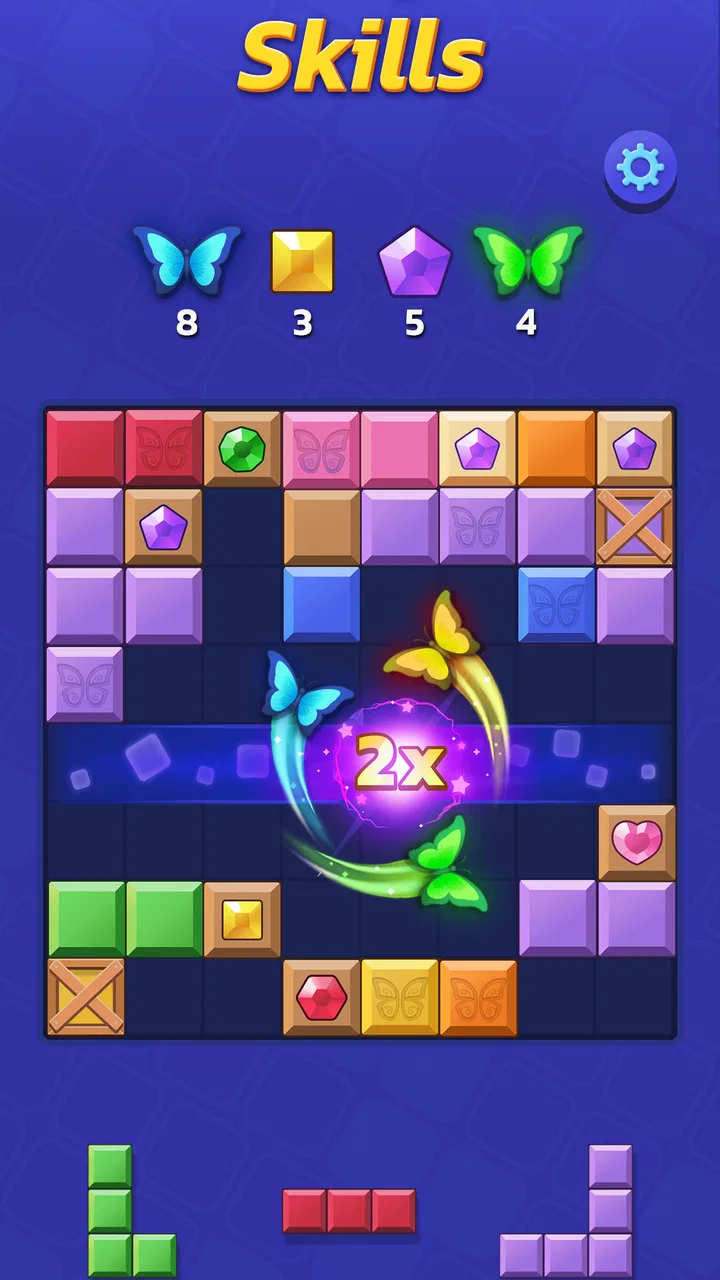
The central appeal is the board itself. You place shaped blocks into open spaces, complete lines or patterns, and try to avoid filling the grid in a way that leaves no useful moves. Unlike a traditional falling-block game, you normally have more time to examine the available pieces. That changes the mood completely: I feel less as if I am reacting at speed and more as if I am solving a small spatial problem.
You May Also Like

 Blood Strike: 2.5 Anniversary
Blood Strike’s Loadouts Turn Every Drop Into a Tactical Gamble
A close look at Blood Strike’s custom loadouts: how fast access to signature weapons reshapes its battle royale rhythm, rewards preparation, and narrows the gap between fights.

 Pandora - Music & Podcasts
Pandora’s Music Is Easy to Start, but Harder to Recover
Pandora’s strength is its low-effort path from a seed to a station. Its weak spot is how much confidence it asks you to place in connection, setup, and quiet recovery.

 8 Ball Pool
 Is Built on Rivalries, Rematches, and Routine
A close look at the rivalries, rematches, shared routines, and unanswered safety questions that turn a quick pool match into a persistent mobile community.

 Samsung Music
’s Quiet Strength Is Playing What You Already Own
Its reach comes less from spectacle than from dependable access to a personal library. That simplicity is both the app’s strongest retention engine and its ceiling.

 AccuWeather: Weather Radar
AccuWeather Review: A Quick, Clear Forecast for Everyday Decisions
For everyday plans, the best forecast is the one you can understand quickly. AccuWeather makes rain timing, radar, and local conditions easy to act on, with a few trade-offs.

 Hill Climb Racing
Why Hill Climb Racing Still Turns Crashes Into One More Run
A tiny car, a bumpy hill and one more upgrade: Hill Climb Racing keeps resurfacing because its simple chaos makes every near-miss feel personal.
More From Our News Desk



The “blast” identity gives the familiar format a more energetic direction. Clearing several areas in a good sequence feels more satisfying than simply dropping pieces into place, especially when one placement opens room for another. The strongest moments come from resisting the obvious move and looking for the placement that preserves flexibility for the next turn.
That is also where the game can punish careless play. A piece may fit perfectly in one corner, yet using that space too early can leave awkward gaps elsewhere. I quickly learned to judge a move by what it allows afterward, not only by whether it completes a line immediately. This makes the game more thoughtful than its bright, approachable presentation might suggest.
For a quick session, I recommend treating the board as a limited resource. Empty squares are not equally valuable. A broad, connected area gives you more options than several small pockets, so I try to avoid creating isolated holes unless the placement also produces a worthwhile clear. This is one of the most useful habits for new players because it improves results without requiring fast reactions.
A relaxed puzzle with a real planning layer
The game works best for people who enjoy arranging shapes, spotting patterns, and making decisions under gradually increasing pressure. It is not a conventional word puzzle, a match-three game, or a pure reflex challenge. If you prefer puzzles with a clear answer and a definite finish, the open-ended board may feel less rewarding. Here, success often means lasting longer and making cleaner choices rather than reaching one final solution.
I also like that the basic rules are easy to understand without a long tutorial. Someone who has played block puzzles before can begin immediately, while a newcomer can learn by experimenting. The simplicity is valuable on a phone because the game does not ask me to remember a complicated system before I can enjoy it.
At the same time, simplicity can become repetition. The core activity remains placing blocks and clearing space, so players looking for a story, character progression, or a large variety of puzzle types may eventually want something more substantial. This is a focused game, not an all-purpose mobile entertainment package.
What the recent release information tells me
The game was released on October 17, 2024, and the current version is 1.20.01. That gives the product a relatively recent starting point while showing that it has already moved through multiple updates. I see that as a positive sign for maintenance, but I would separate that evidence from any assumption about future additions. A newer version suggests ongoing attention; it does not guarantee a particular roadmap.
For someone installing it today, the practical effect is that the experience should be judged as an actively evolving puzzle rather than an old, finished one. Existing players may notice adjustments in presentation, balance, or the way sessions are organized as versions change, but I would not treat every update number as proof of a major redesign. Version progress can include small refinements as well as visible changes.
The Android requirement is also friendly to people using older compatible devices. Support for Android 7.0 or later makes the game easier to consider on a spare phone or a family device, rather than limiting it to the newest hardware. I still prefer playing on a screen that gives the board enough room to read comfortably, because crowded visual space makes planning harder even when the puzzle itself is not technically demanding.
One detail worth keeping in mind is that the game is free to download but includes purchases ranging from $0.99 to $99.99 per item. I can enjoy the core puzzle without treating payment as part of the basic entry decision, but the presence of purchases matters for anyone who shares a device or wants to keep spending tightly controlled. I would check the purchase settings before handing the phone to a child, even though the content rating is Everyone.
How it fits into an ordinary day
My favorite use case is a short waiting period: sitting in a café before a meeting, waiting for a train, or taking a few minutes away from a long task. I can play one small session without needing to remember a storyline or rebuild context. If I make a poor decision, the consequence belongs to that board, and I can put the phone down without feeling that I have interrupted a larger adventure.
It can also work as a gentler alternative to fast arcade games. When I am tired, I do not always want flashing reactions or a countdown. The block format gives me enough breathing room to inspect the board, but it still keeps my mind engaged. That balance is probably the game’s most practical strength.
There is a trade-off, though. Because the game is so easy to restart, it can quietly turn a five-minute break into a much longer one. I find it useful to decide in advance whether I am playing one attempt or simply checking the board for a moment. The design encourages “just one more try,” particularly after a mistake that feels avoidable.
Three habits that make the board easier to manage
My first tip is to protect the center and the largest open regions for as long as possible. Corners can be helpful because they contain pieces neatly, but filling too many corners early may force later shapes into the middle. I usually place a block where it preserves several future routes, even when another location offers a faster clear.
Second, I look at the awkward pieces before committing to a move. Long bars, compact squares, and irregular shapes do not create the same problems. If I already have a narrow gap that only one type of piece can use, I avoid blocking it unless the immediate clear is clearly worth the risk. This forward check is more valuable than trying to maximize every single turn.
Third, I use a nearly complete line as a planning tool rather than an automatic target. Completing it may feel attractive, but leaving it open can sometimes preserve a flexible area for a difficult piece. The right choice depends on the remaining space. A delayed clear is often better than a quick clear that divides the board into unusable pockets.
These habits are not hidden buttons or special modes; they are ways of reading the board that become important after the novelty fades. They also explain why I would not describe the game as mindless. The controls are straightforward, but good play depends on managing future options.
Where the experience can lose momentum
The biggest limitation is variety within the central loop. If I want a puzzle that constantly introduces new rules, changing objectives, or a strong sense of progression, this may feel narrow. Its appeal comes from polishing the same basic skill, so enjoyment depends heavily on whether arranging blocks remains satisfying after repeated sessions.
Another possible friction point is the relationship between free access and in-app purchases. The game costs nothing to start, which lowers the barrier for casual players, but purchase options can make the experience feel less clean for people who prefer a completely self-contained puzzle. I would be especially cautious if I dislike any interruption to a relaxed session or if I am choosing a game for a child’s device.
The Everyone rating makes it broadly approachable, but age suitability and personal preference are not identical. A young player can understand the block concept, while an adult may still need to supervise spending controls. Conversely, an experienced puzzle fan may find the presentation accessible but the challenge too repetitive if they expect deeper systems.
I would also skip it if my main goal is competitive speed. The game’s strength is deliberate placement, not the physical excitement of rapid falling pieces. A traditional timed block game is a better choice for someone who enjoys reflexes, escalating speed, and immediate pressure. A match-three title may be preferable for players who want chain reactions and quick visual rewards rather than open-ended spatial planning.
How it compares with familiar puzzle alternatives
Compared with falling-block games, this one gives me more control over timing and placement. I can study the board instead of reacting to pieces descending in real time. That makes it more comfortable for relaxed play and for people who enjoy planning, but it removes some of the adrenaline that makes classic falling-block formats exciting.
Compared with match-three puzzles, the challenge is less about searching for a quick combination and more about preserving room. A match-three board often rewards scanning for immediate matches; this board rewards thinking several placements ahead. Players who like long-term spatial decisions may prefer this approach, while those who want frequent cascades may find it comparatively quiet.
Compared with sudoku, it is more tactile and less fixed. Sudoku offers a logic structure with a final completed grid, whereas this game asks me to adapt to pieces as they arrive. That makes sessions easier to start but also less definitive. I can improve my judgment, yet there is no single solved state to work toward in the same way.
In my view, the best alternative depends on the kind of concentration you want. Choose this game for flexible, visual planning in short sessions. Choose sudoku for slower deduction, a falling-block game for reflex pressure, or match-three for fast pattern recognition. It does not replace those categories; it occupies a comfortable middle ground between calm thinking and ongoing challenge.
Who should install it, and who should pass?
I would recommend it to casual puzzle players, commuters, people who enjoy wooden block aesthetics, and anyone wanting a low-learning-curve game that can be played in brief bursts. It is also a reasonable option for households looking for an Everyone-rated title, provided purchase controls are handled responsibly.
I would be more hesitant to recommend it to players who need a strong narrative, a large collection of distinct modes, or a clearly finite campaign. It may also disappoint anyone who expects every session to feel different. The board changes through the pieces and decisions, but the underlying activity remains consistent.
For returning users, the current version number is useful context rather than a promise. The product has progressed beyond its initial release, so it is worth checking the present build if an earlier experience felt rough or incomplete. Still, I would install it for the core block puzzle first and regard future evolution as a bonus, not the reason to download it.
My recommendation after spending time with it
The best reason to play Woodoku Blast is its balance between immediate accessibility and quiet strategic pressure. I can understand it quickly, yet the board rewards patience, space management, and thinking beyond the next clear. That combination makes it more engaging than a purely disposable time-killer.
Its weaknesses are equally clear: the central loop may become repetitive, and the free-to-play structure will not suit everyone. The game is not trying to be a story-driven adventure or a deep competitive platform. It is a focused block puzzle that succeeds when I want a compact mental break without a demanding setup.
With a free price, Everyone content rating, and support for Android 7.0 or later, it is easy to try. I would approach the purchase options thoughtfully, especially on a shared device, and I would compare it with a faster or more varied puzzle game if I know I lose interest in repeated board play. For my own use, it earns a recommendation as a dependable short-session puzzle, particularly when I want to slow down, preserve open space, and make one careful move at a time.
FAQs for Woodoku Blast
01What is Woodoku Blast and how does it work?
Woodoku Blast is a puzzle game that combines elements of Sudoku with block puzzles. Players place blocks on a 9x9 board to clear lines and squares, similar to Sudoku. The goal is to strategically place blocks to maximize space and score points. It's designed to be a relaxing yet challenging brain exercise.
02Is Woodoku Blast free to play, and are there in-app purchases?
Woodoku Blast is free to download and play. However, it offers in-app purchases that can enhance the gaming experience. These may include ad removal, special block packs, or additional hints. Players can enjoy the game without spending money, but purchases can provide advantages or conveniences.
03What are the system requirements for Woodoku Blast on Android and iOS?
For Android, Woodoku Blast typically requires Android 5.0 or later, while iOS users need iOS 11.0 or later. It's designed to work smoothly on most modern smartphones and tablets, but it's always best to check the specific requirements on the app store page to ensure compatibility with your device.
04Does Woodoku Blast offer any multiplayer or social features?
Woodoku Blast primarily focuses on single-player gameplay. However, it often includes leaderboards where players can compare their scores with friends or global players. This competitive element adds a social aspect, encouraging players to improve their skills and climb the rankings.
05How does Woodoku Blast enhance cognitive skills?
Woodoku Blast helps enhance cognitive skills by requiring players to think strategically and plan ahead. The game challenges spatial awareness, problem-solving abilities, and critical thinking. Regular play can improve mental agility and concentration, making it a fun way to keep the mind active and engaged.
Pros
- Engaging puzzle mechanics
- Beautiful minimalist design
- Smooth and responsive controls
- Offline play available
- Regular updates and events
Cons
- Ads can be intrusive
- Limited hints available
- No multiplayer option
- Requires patience for progression
- Can be repetitive over time

Woodoku Blast
Gallery